
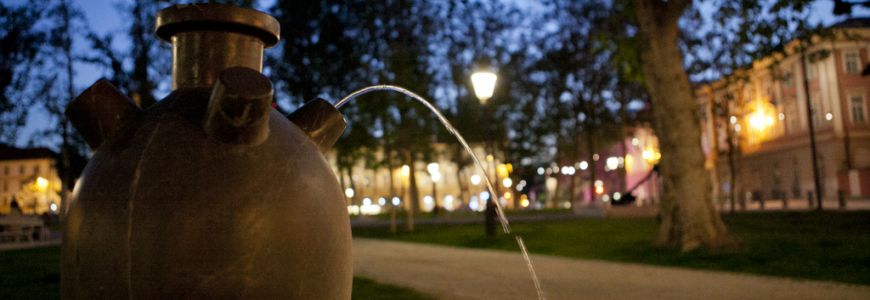
Dr. Lidija Globevnik, our expert in water resources management, environmental and water policies, and strategies, gave a lecture at the 8th Slovenian Urban Forum on the importance of drinking water for the future of Slovenian cities. A summary of the lecture from the report of the 8th Urban Forum:
“Ensuring drinking water is crucial for quality of life in cities, yet after 2030 this will not necessarily be taken for granted. In the past, virtually all water was drinkable. The natural water cycle keeps all water fresh and therefore potable. Later, people began to channel water and use it for various purposes. The supply of drinking water is part of the social cycle, within which we as a society ask ourselves whether we have enough water available, what we use Slovenia’s drinking water for, and how efficient we are in collecting and treating used water. In the future, decision-making and water use in agriculture, industry, energy production, and tourism will become increasingly important—especially in Slovenia, where more water is used for economic activities than in other European Union countries. Of this water, only about half is treated, whereas statistics show that other countries treat around 80% of the water used for economic purposes.
The core idea of the green transition is resilience to the many climate changes that are coming. For cities, solutions therefore are not only fountains and drinking fountains, but also diversified landscapes, for example in the form of ponds and undeveloped riverbanks. In doing so, conflicts between water protection and aquatic ecosystems must be taken into account, as these are often at odds both in Slovenia and at the EU level. In recent years, biodiversity and flooding have also come to the fore. This is why most activities are linked to three pillars: groundwater and underground retention systems; research and development projects on alternative interventions and green solutions (e.g. maintenance of green walls or roofs); and sensible change management, as social awareness of environmental issues is increasing. Nevertheless, there is a shortage of experts, which is why Lidija Globevnik calls on municipal authorities to support studies in hydraulic management of water supply systems, management of hydrotechnical structures, and ensuring the health safety of water in the future as well.
The good news regarding the water crisis is that only about 40% of water-related problems are linked to climate change, while everything else is a consequence of human behavior and our decisions. This means we have significant potential to influence water management by 2030. Although Slovenia will have sufficient drinking water by the end of the decade, market interests will continue to grow, making it essential that the public interest prevails over them. We must also be cautious in implementing green transition ideas and adapt them to the local context. Slovenia has long been an innovator and should become known as an example of water management for all of Europe.”